Oregon Equine

International Certificate of Veterinary Inspection for Travel to Canada

International travel to Canada requires:

  • A physical examination by a federally accredited veterinarian. Dr. Wilson is a federally accredited veterinarian.

  • A negative Coggins test within 6 months of travel to Canada. To learn more about a Coggins test, refer to the horse health article “Coggins Test for EIA”.

  • A separate USDA–Canada CVI, which is valid for only 30 days. The horses must be back in the USA by the end of the 30 days, or a new Canadian CVI will need to be generated in Canada for the horses to return to the USA.

Consequences of Not Having a USDA-Endorsed CVI

Without a USDA-endorsed Certificate of Veterinary Inspection (CVI), there are significant risks and potential consequences for entering Canada with a horse.

Potential Outcomes

  • Denial of Entry: The horse may be denied entry into Canada, as the CVI is essential for proving the animal's health status.

  • Return to the U.S.: If denied entry, the horse could be sent back to the U.S., which may entail additional costs and logistical challenges.

  • Quarantine: The horse may be quarantined at the owner’s expense until the proper documentation is provided, resulting in further delays and potential health risks for the animal.

Importance of Compliance

Having a USDA-endorsed CVI is crucial for ensuring compliance with Canadian import regulations. This certificate verifies that the horse meets all health requirements necessary for entry, thus preventing complications during travel.

Cerificate of Veterianry Inspection for Travel Between States

Certificate of Veterinary Inspection (CVI)

  • CVI is a state-mandated form that is required for horses coming from one state into another state and back to the state of origin 

  • Each state has its own CVI requirements.

  • This examination focuses on contagious equine diseases.

  • CVI requires a negative Coggins lab test result.

  •  In Oregon, there are two types of CVI’s

A 30-day certificate CVI

  • The horse may travel to a specified address on the CVI form in another state, but must be back in Oregon before the 30-day CVI expires.

  • The 30-day CVI is valid for a single trip to a single destination.

A 6-month certificate EECVI (Equine Extended CVI) 

  • An Extended Equine Certificate of Veterinary Inspection (EECVI) is a six-month equine health certificate that allows horses to travel across state lines for up to six months without requiring a new certificate for each trip.

  • The horse may travel to any state that accepts the EECVI and back into the state of origin for six months.

  • A Health Declaration and Movement Permit (HDMP) is the travel document that horse owners create for each individual trip when using an EECVI.

    • Prior to each movement, owners log in to their MyVetLink account, enter their travel dates, origin, destination, and confirm that their horse is healthy.

    • The system generates an HDMP that serves as the documentation displayed when crossing state borders.

    • The HDMP must be kept together with the EIA/Coggins test (digital or paper copies are acceptable) for the EECVI to remain valid.

  • If the horse is sold within the six months of the EECVI, the EECVI is not transferable to a new owner.

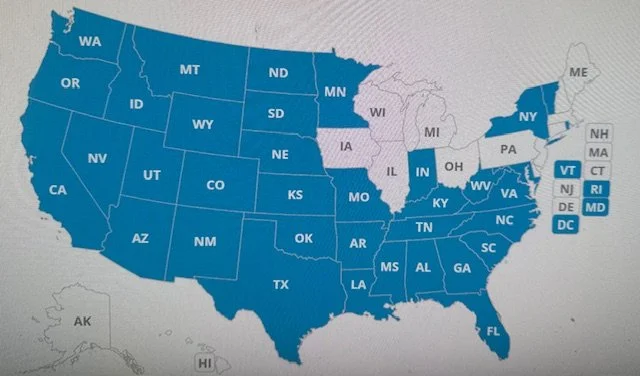
The states in blue accept the EECVI. Image from Global Vet Link.

Coggins Test For EIA

Coggins test:

  • This is a federally mandated blood test for Equine Infectious Anemia (EIA)

  • This test is required to cross from any state into another state, to travel to another country, or when a horse is sold.

  • The blood sample is sent by a federally accredited veterinarian to a federally approved laboratory. Dr. Wilson is a federally accredited veterinarian.

  • EIA is highly contagious, and there is no cure for EIA. Please read the horse health article “Equine Infectious Anemia [EIA]”.

  •  There have been positive EIA cases in most of the lower 48 states, including the Pacific Northwest.

Equine Infectious Anemia [EIA]

Equine Infectious Anemia

Last Modified: December 10, 2025

USDA APHIS Animal Diseases

Equine infectious anemia (EIA) is a viral, and sometimes fatal, disease that only affects equids (horses, ponies, zebras, mules, and donkeys). There is no treatment. EIA can be difficult to recognize and may be confused with other diseases. EIA exists in nearly all countries worldwide, including the United States. It is a reportable animal disease in all States. It is not a threat to human health.

Clinical signs range from mild to severe and appear within a few weeks after infection. However, it may take 60 days or more for the horse to test positive.

Infected animals that survive the disease become carriers of the virus and can infect other equids for life. They must either be euthanized or permanently isolated from other equids to prevent transmission. Carriers may also experience clinical flare-ups, often following stress or strenuous work.

 What to look for:

  • Fever

  • Decreased appetite

  • Severe anemia

  • Sudden death

  • Jaundice (yellow discoloration of mucous membranes)

  • Rapid breathing, rapid heart rate

  • Swollen limbs

  • Bleeding from the nose or red/purple spots on the mucous membranes

  • Blood-stained feces

  • Chronically infected horses may show no clinical signs.

 How to Prevent:

Biting, blood-feeding flies, such as horseflies or deerflies, can spread the virus from one animal to another. Historically, this has been the primary way EIA has spread. Animals can also get the virus from unclean or reused needles and syringes, blood transfusions, and contaminated instruments, such as IV sets, dental instruments, and tattoo equipment. This type of human-facilitated transmission is now the most common way EIA spreads in the United States, particularly among current or former Quarter Horse racehorses, many of which have ties to unsanctioned (bush track) racing.

 To prevent the spread of this disease:

  • Control biting flies on your property to reduce your animals' exposure.

  • Never reuse needles, syringes, or IV sets.

  • Only use licensed and approved blood products.

  • Make sure blood transfusions are performed only by licensed veterinarians, using blood products from donor horses that have tested negative for EIA and other blood-borne infections, such as equine piroplasmosis.

  • Test your horses, ponies, mules, and donkeys annually for EIA.

  • Call your veterinarian if you suspect EIA in any equid. Immediately move horses, ponies, mules, or donkeys that you think might have EIA at least 200 yards away from other equids on your property.

 How is EIA treated

There is no treatment or vaccine. Because infected animals become lifelong carriers, they must be permanently isolated and quarantined or euthanized.
 

Help Your Horse Beat the Heat

With the upcoming heatwave, there is an increased chance of overheating and colic. Here are some tips to care for your horse during the upcoming hot weather.

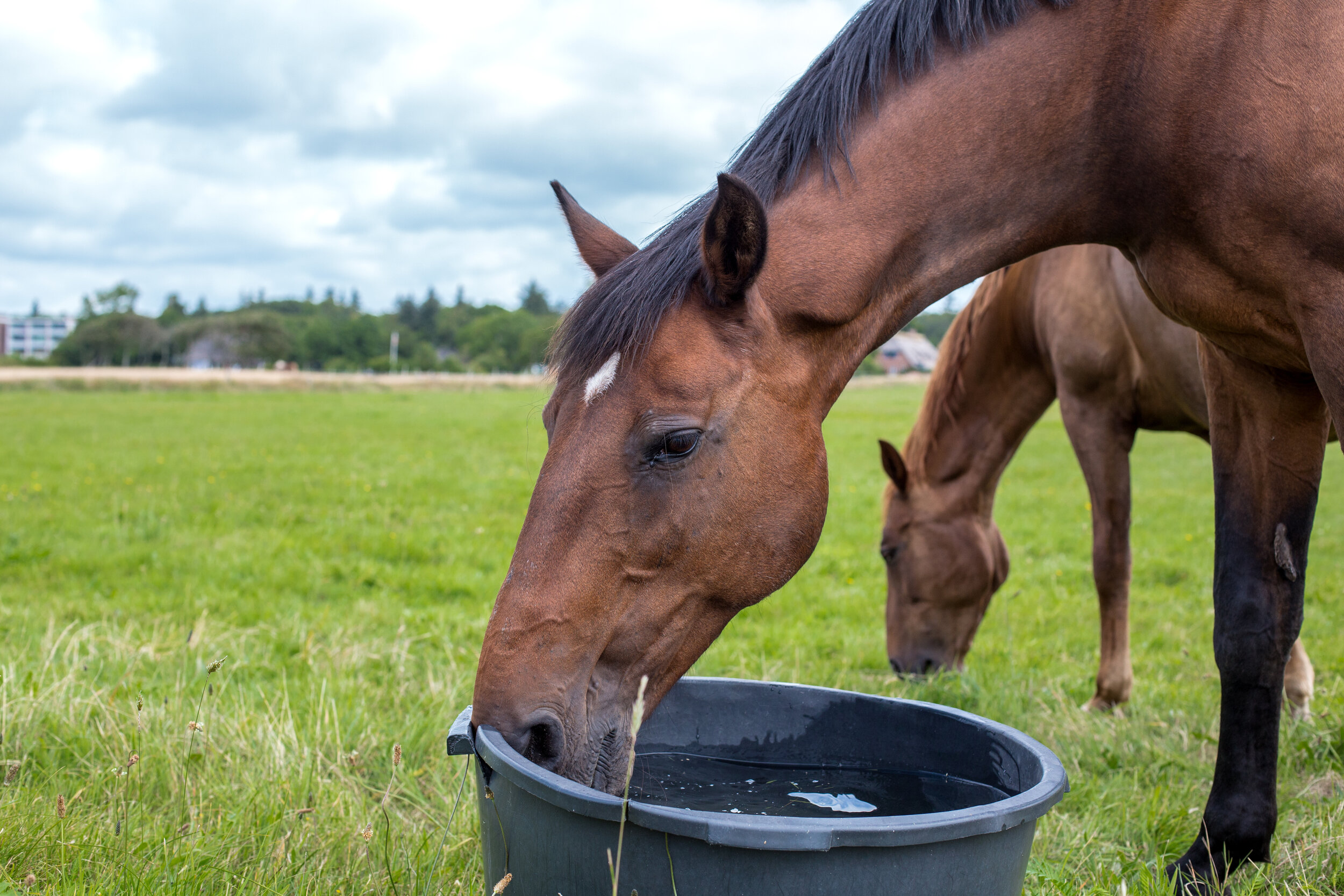
  • Always have fresh, clean drinking water. Clean buckets and troughs can also improve drinking. Horses require, on average, at least 10 gallons of water a day, more when it is hot.

  • Provide a shaded area with the breeze blowing on your horses. If there is no shade tree in the pasture for the horses, keeping them in the barn with open ventilation and fans blowing on them can work well.

  • Horses cool off by conduction and evaporation. Giving a cold water "shower" for 5 minutes helps cool by conduction, and then sweat scraping off the extra water allows the horse to raise their hair and cool by evaporation. Conduction and evaporation work together to cool the horse.

  • To increase water consumption, make any grain feed into a "soup" by adding water to the feed and soak the hay.

FOR MORE HYDRATION TIPS CLICK HERE.

  • Feeding electrolytes will help for three days; after that, the kidneys will excrete the extra electrolytes.

  • Have a white or Himalayan salt block available in pastures and stalls.

  • Do not work your horse in extreme heat.

To help monitor your horse check the following:

  • Temperature.  The normal horse temperature range is 99.0 – 101.5.

  • Heart rate:  Normal heart rate range is 28 – 40 beats per minute

  • Resting respiration rate: Normal resting respiration range is 8 – 12 breaths per minute.

  • Excessive sweating or lack of sweating.

  • Eating, drinking, urination, defecation, and overall attitude.

If your horse is not drinking, has any elevated vital signs (heart rate, respiratory rate, temperature), is not sweating or sweating too much, or is dull or depressed call on the emergency line as soon as possible.   

Dr. Janine Wilson DVM, CAC

Oregon Equine Inc

503-631-4100


Wildfire Smoke Inhalation and Returning Your Horse to Work

Horses In Oregon Wildfire Smoke.jpg

This past week has been very trying for all of us.  I am concerned about you and your horse and have put together the following information to assist you in returning your horse to work.

Wildfire smoke causes air quality to be poor.  The Air Quality Index (AQI) is used to gauge the safety of exercise for human athletes.  The AQI can also be used as an index to assess the safety of equine exercise in smoky environments. Moderate to intense exercise should be reduced or limited in sensitive horses when AQI is over 100. AQI over 200 is considered extremely unhealthy, and training or competition should be postponed or canceled.  Standing in and breathing smoke-filled air with an AQI over 200 will cause inflammation and damage to your horse's airway.

Airway damage resulting from wildfire smoke takes 4-6 weeks to heal. Ideally, plan on giving your horse that amount of time off from the time when the air quality returns to normal. Attempting exercise may aggravate the condition, delay the healing process, and compromise your horse's performance for many weeks or months.

After the smoke has dissipated and the AQI is under 100, the following return to an exercise program can be started.

  • Week 1 & 2 – pasture turnout and slow hand walk daily for 20 minutes. 

  • Week 3 – Brisk hand walk daily for 30 minutes.

  • Week 4 – Ride at a walk

  • Week 5 & 6 – Ride at a walk and trot

  • Week 7 – Return to regular exercise

Your horse will need to be examined if any of the following clinical signs are observed.  Call on the emergency line.

  • Resting respiratory rate more than 30 bpm,

  • Obvious flaring of nostrils,

  • Wheezing or noisy breathing,

  • Increased effort of breathing with the development of a "heave line" along the horse's lower abdomen,

  • Repetitive or deep coughing,

  • Abnormal nasal discharge, or

  • Non-pink mucus membranes

The following additional management aids will be helpful to your horse.

  • Wet the hay to decrease dust

  • Place fans with misters in the barn to humidify the air

  • Feed Vitamin E  (3000-4000 IU's per day per 1000 pound horse)

  • Feed omega fatty acids. 

  • Platinum Performance is already high in omega fatty acids.

Please know that other veterinarians and I are not making the restricted return to exercise recommendations lightly.  There is a 2019 research study by Bond et al., published in the Journal of Veterinary Internal Medicine, measured the inhalation and aerobic capacity in exercising polo ponies that had wildfire smoke inhalation from the Calgary wildfires. The aerobic capacity, or oxygen uptake, of an exercising horse, is measured by the maximal oxygen consumption or VO2 max. Bond's study conducted VO2 max measurement with wildfire smoke in the air and then again after two and a half weeks of wildfire smoke-free air.  The horses had a 15% increase in speed with a similar increase in VO2max after being in smoke-free air for two and a half weeks.  This research shows the profound effect of smoke on the horse's lung function and performance.

Oregon Equine is here to help you and your horse get through this trying time and back to enjoying your activities together.  Please call with questions or concerns.

Sincerely:

Dr. Janine M Wilson DVM, CAC

503-631-4100

Horse Hydration Tips

Horse Drinking_179123469.jpeg

The average 1000-pound horse requires around 10 gallons of water a day for maintenance. 

When the horse is in work or the weather is warm, they require more water.  Different breeds will drink different amounts depending upon their genetics. Tracking how much water your horse drinks is a great way to learn and know your horse's average water consumption. When a horse does not drink enough water, this can cause colic and other health problems.  

Try the following tips to help your horse drink more water. 

  • Always offer fresh, clean water.

  • In addition to fresh, clean water provide a second bucket of flavored water. Some flavors that horses like are:

    • Molasses (add to the water until it is the color of iced tea) 

    • Carrot or apple juice added to the water

    • Float small pieces of apples and carrots in the water 

    • Peppermint food flavoring

    • Licorice food flavoring

  • If you change barns and the horse does not like the water in the new barn, you may need to bring water from another source (home, store, previous barn, etc.) to get them to drink.  Once they are drinking the water, you are bringing consistently, make a second bucket of water and start to replace 1/4th of this bucket with 1/4th of the new barn water.   Every four days, increase the new barn water in the one bucket.  For example: 

    • ¾ bucket of water from home and ¼ bucket of new barn water for four days, then

    • ½ bucket of water from home and ½ bucket of new barn water for four days, then 

    • ¼ bucket of water from home and ¾ bucket of new barn water for four days, then

    • All new barn water

  • Chelated electrolytes

    • Chelated electrolytes are electrolytes tied to a protein (amino acid)

    • The horse's body absorbs chelated electrolytes, and they activate the thirst center in the brain. 

    • The horse's kidneys excrete the extra electrolytes into the urine after three days, so only use electrolytes for up to three consecutive days. 

  • Soaked Hay

    • Fully submerge hay in water for 30 to 60 minutes in a large plastic tub.  Feed the wet hay in the tub after dumping out the excess water.  Feeding the damp hay in the soaking container will help it stay moist and not dry out.

  • Grain Soup

    • Grain "soup" or "oatmeal" is an easy way to increase your horse's water consumption.   Start by mixing 1 cup of grain with 2 to 4 cups of water.  Let this mixture sit and absorb the water.  Then add more water and feed to your horse.